
— by Albert Gómez Herrera
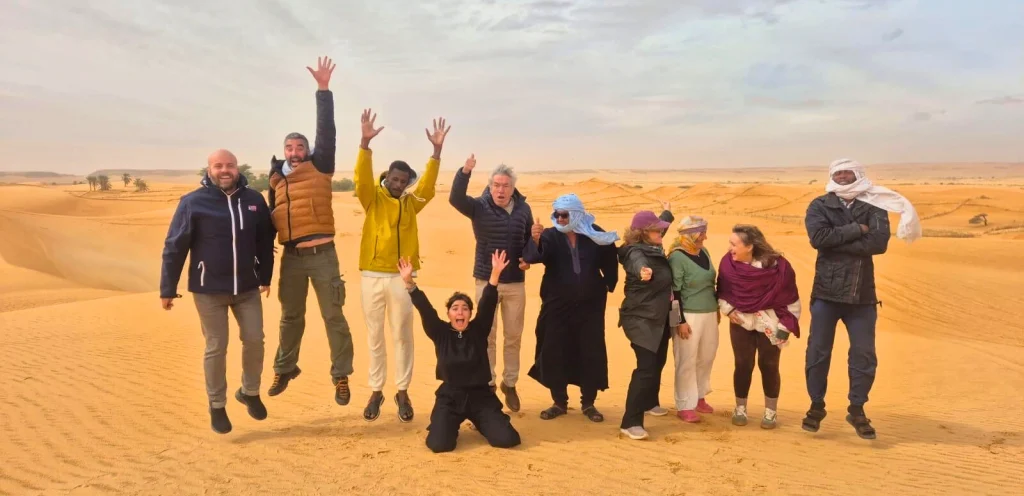
Some trips stay in your memory, and some experiences move in and take root. The Chinguetti Project, led by the Europamundo Foundation in Mauritania, has been one of those experiences for me — one you don’t forget, because it doesn’t end as a memory: it transforms you. It has changed the way I look at the world, the way I understand the value of time, the way I question what is truly necessary in life — and what my responsibility is as a visitor, as a professional, and as a person.
Before arriving in Chinguetti, I thought I was going to get to know a place. After spending a few days there, I understood that what I was really going to get to know was a community, a form of resistance, and a profound lesson in human dignity. It wasn’t just about traveling — it was about listening, observing, and allowing yourself to be challenged.
My arrival in Mauritania was far simpler and more human than I had imagined. From the very first moment, I felt accompanied. They came to pick us up and took us to an apartment where I could rest and begin to take in where I was. That gesture — seemingly small — was, in truth, a statement of intent: care, respect, and hospitality.
In contexts that aren’t our own, those first details matter more than we think. They place you, they calm you, and they remind you that you’re stepping into a place where human relationships are still at the center.
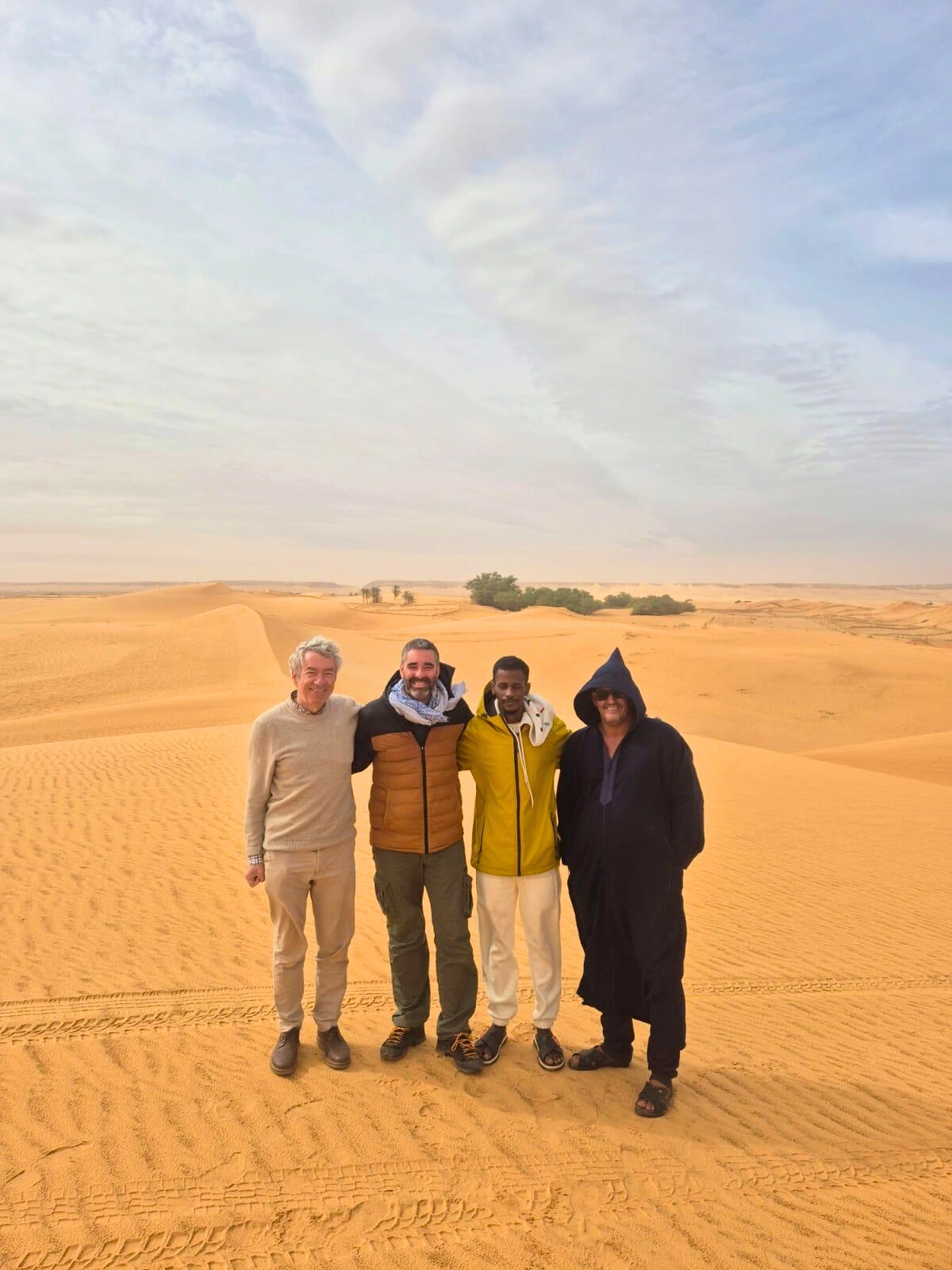
The next day we left Nouakchott for Chinguetti. The journey is long, but deeply revealing. As the cityscape fades and the desert starts to take over the horizon, you begin to slow down—almost without realizing it.
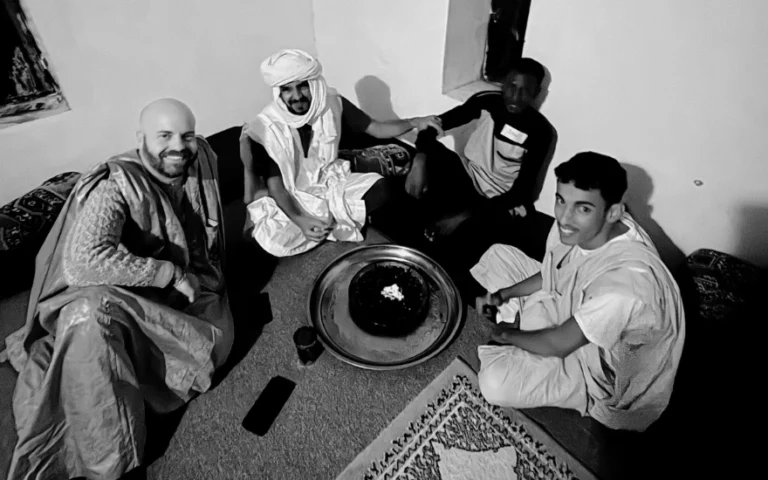
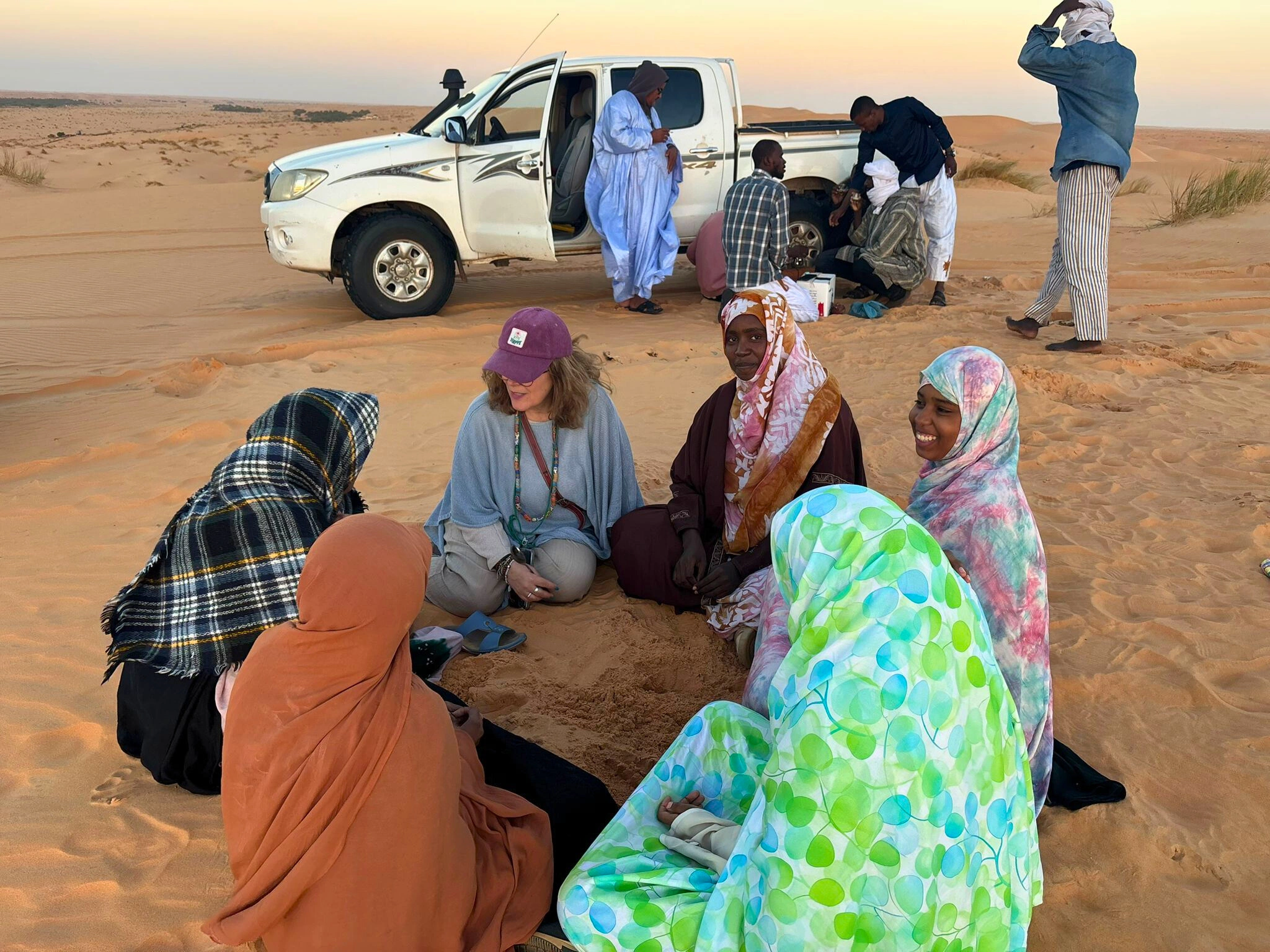
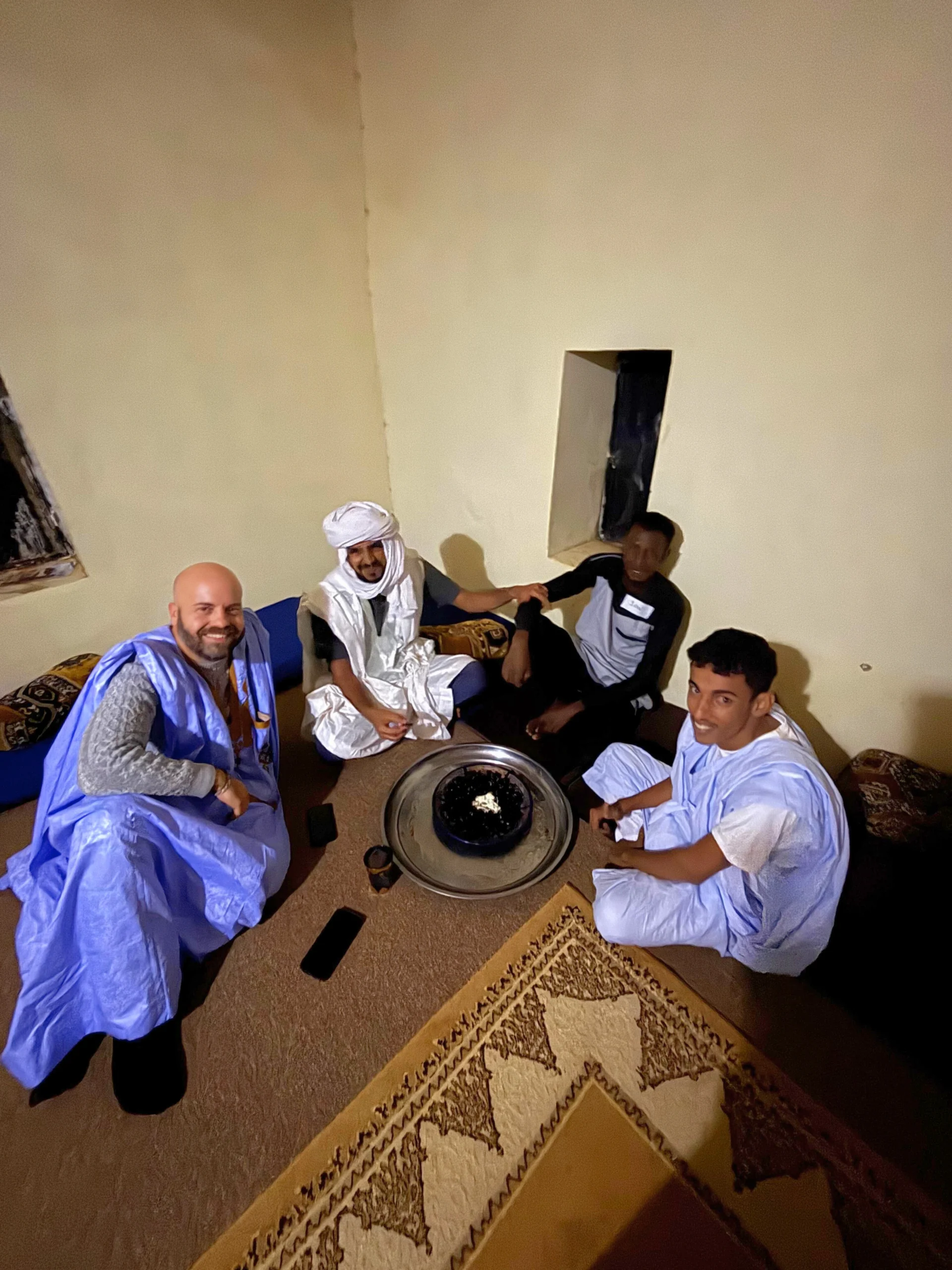
We made several stops along the way, and that’s when tea became part of our daily rhythm. Tea isn’t just a drink; it’s a social ritual, a space for conversation, a way of caring for the other. Sharing tea is sharing time — and in Mauritania, time is offered without hurry.
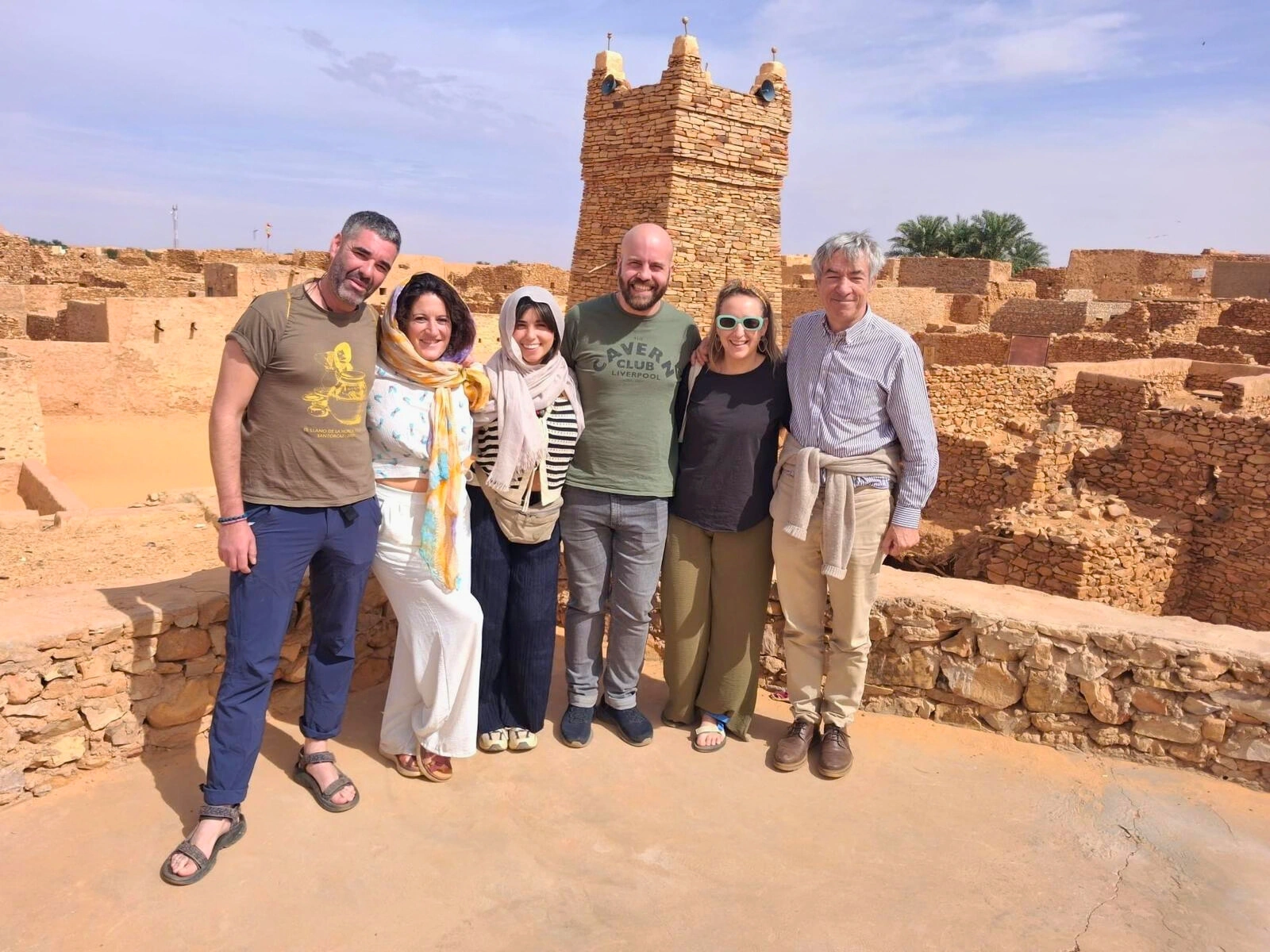
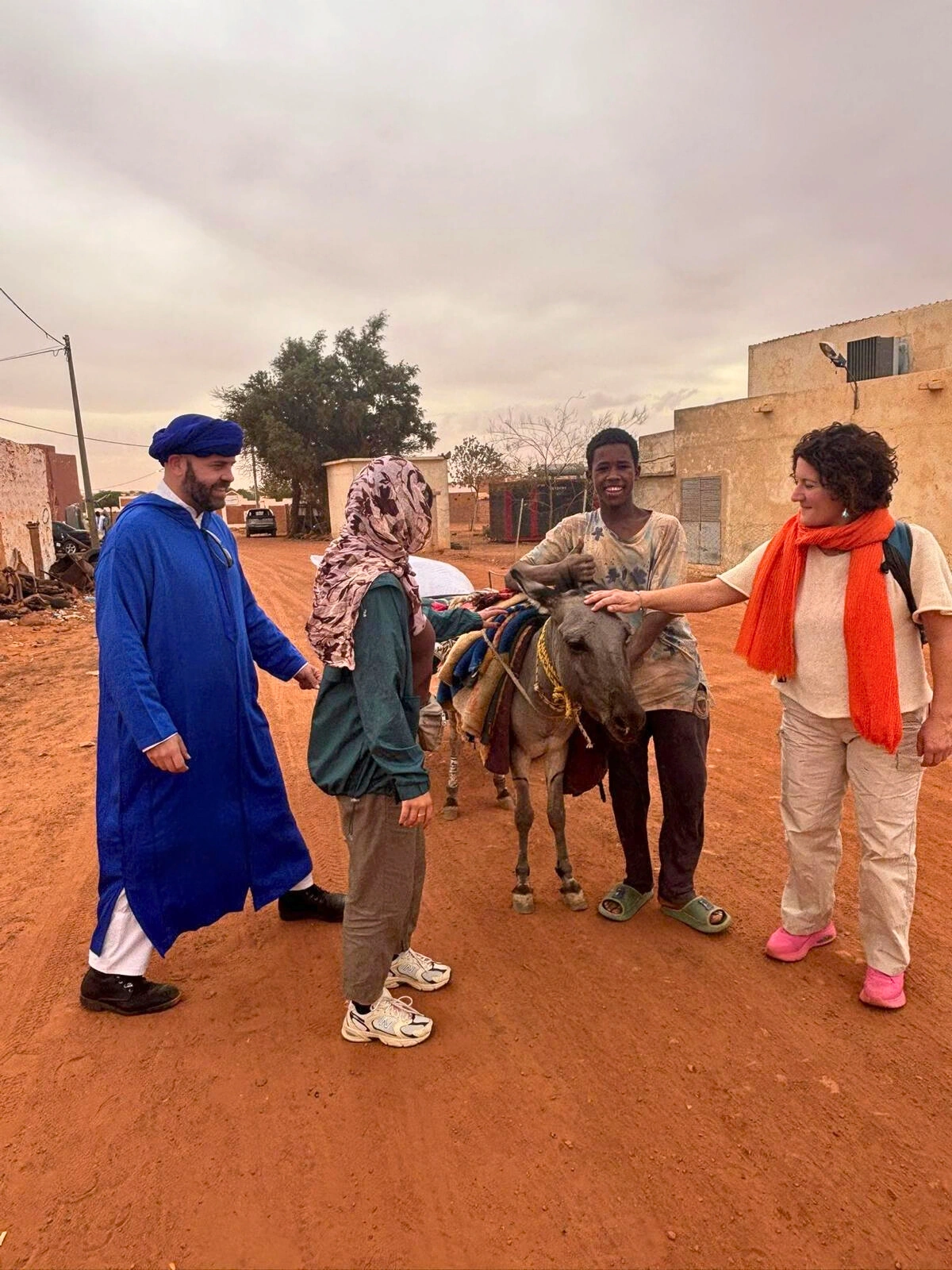
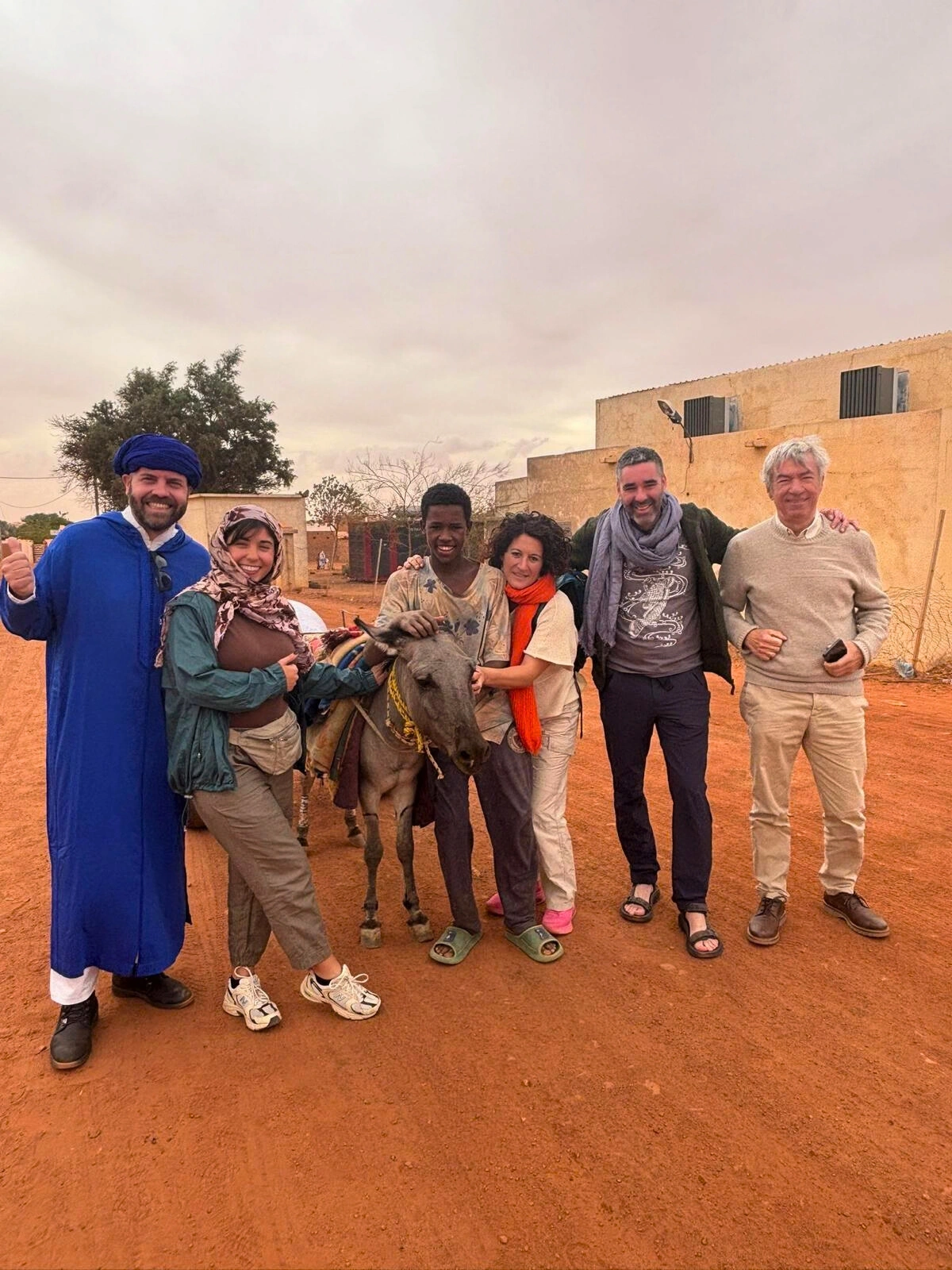
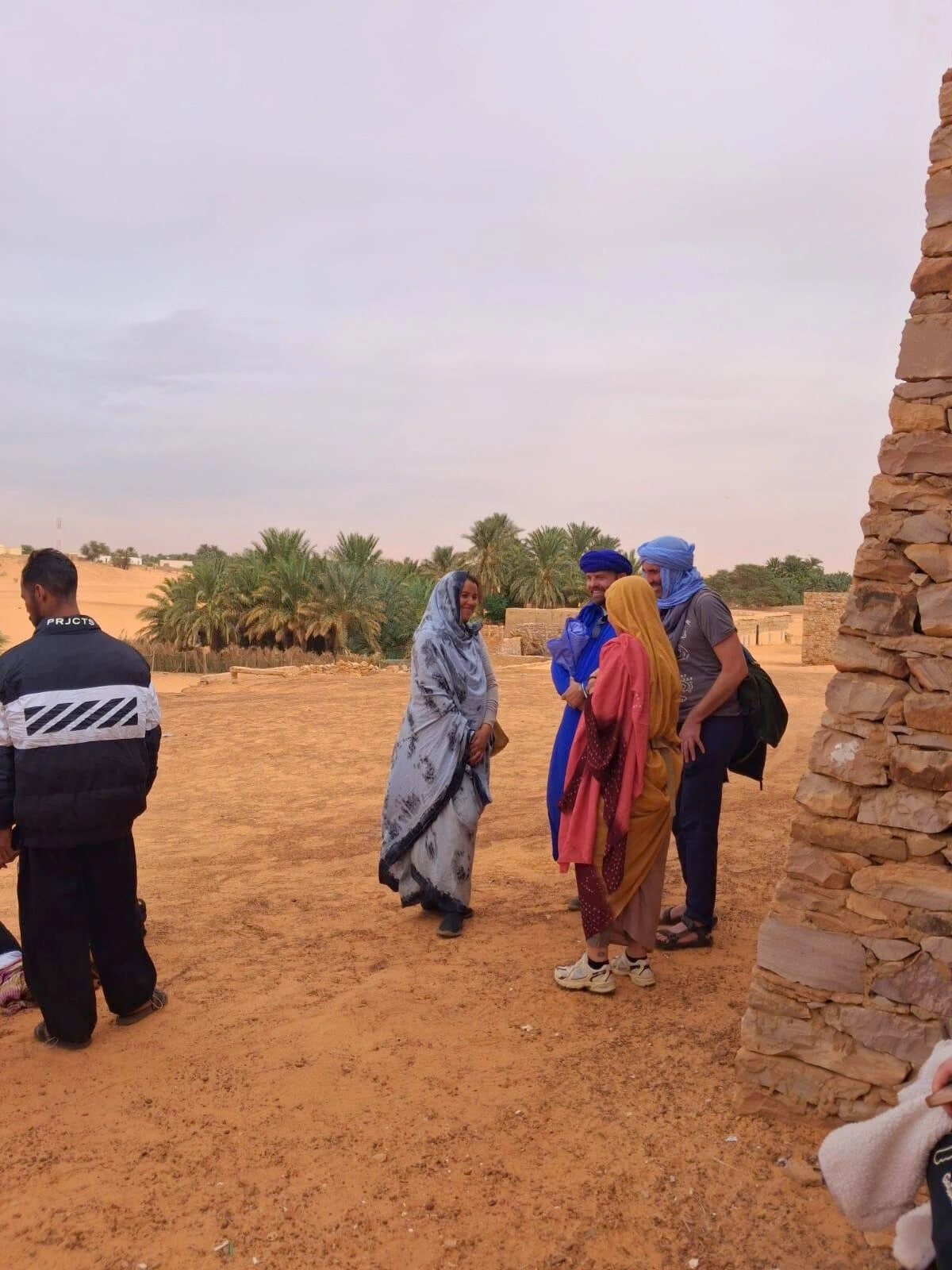
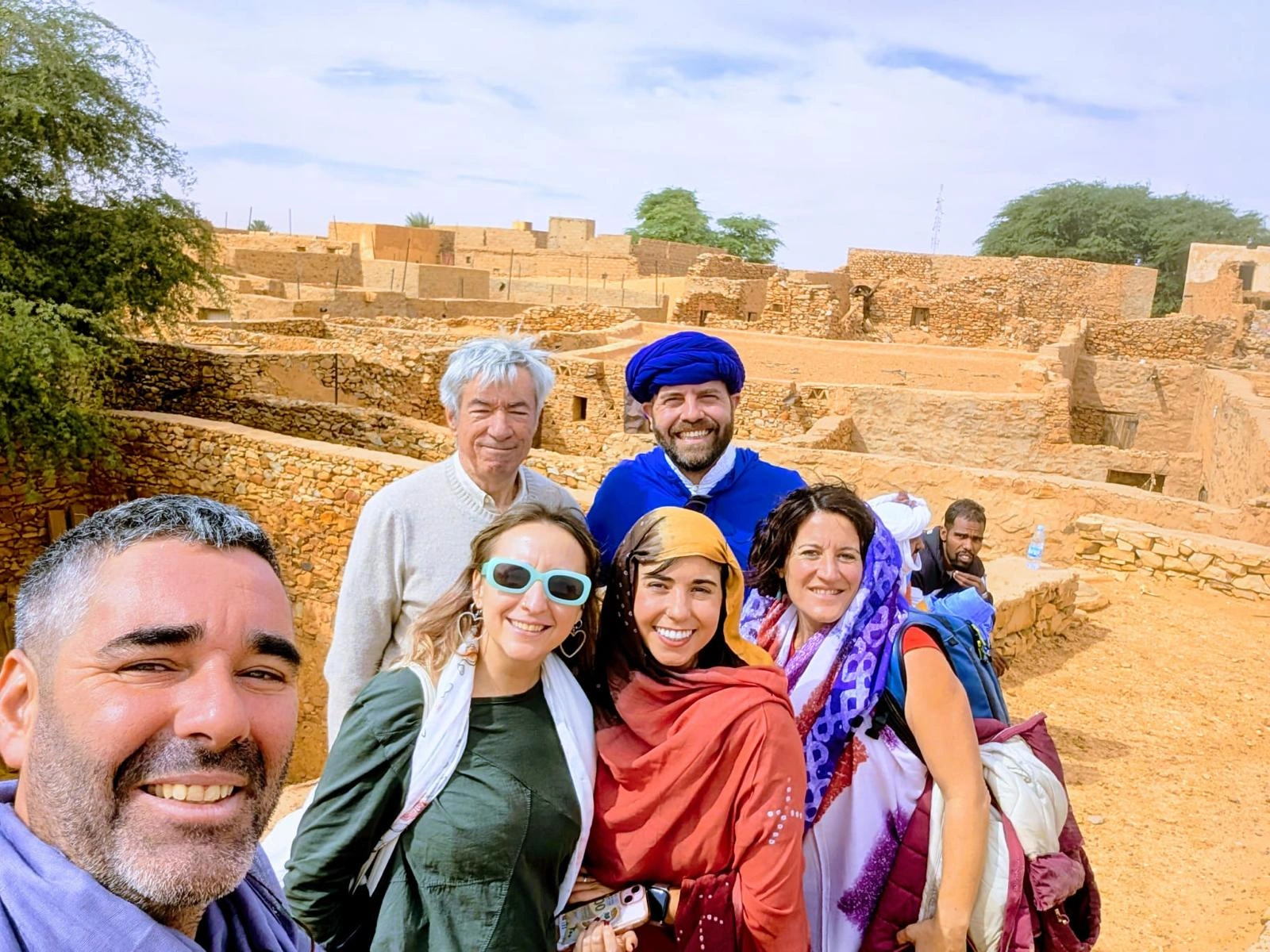
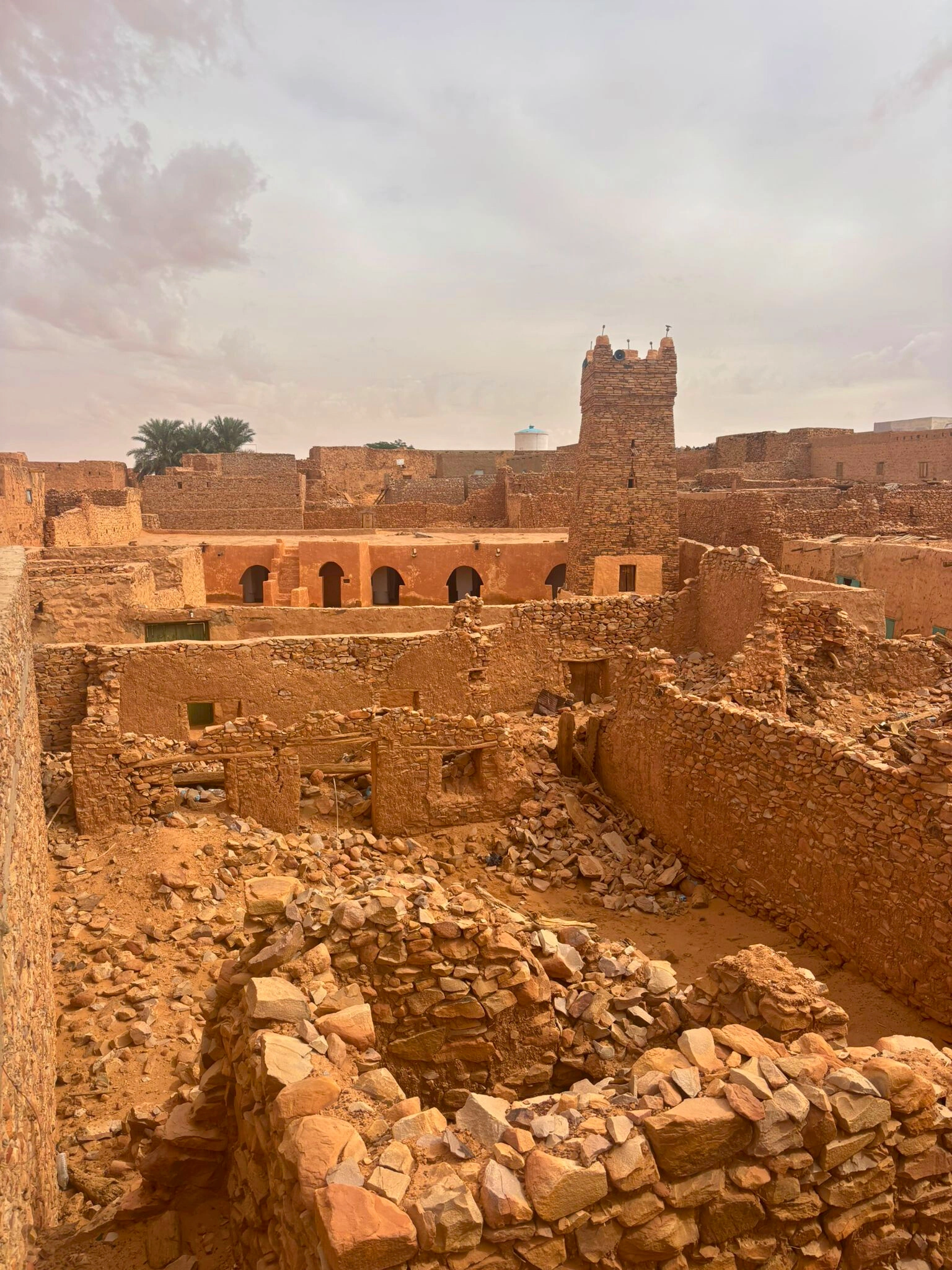
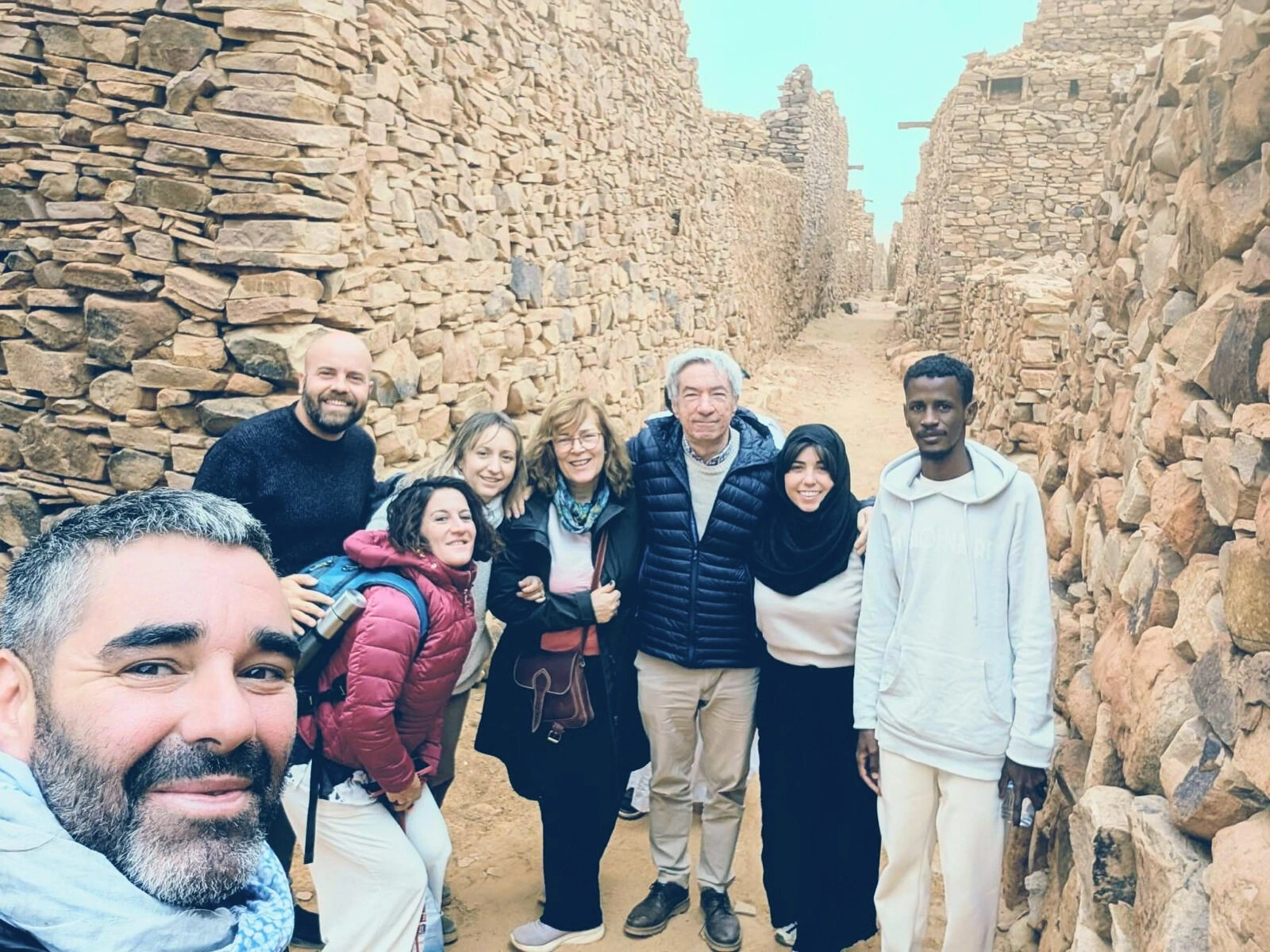
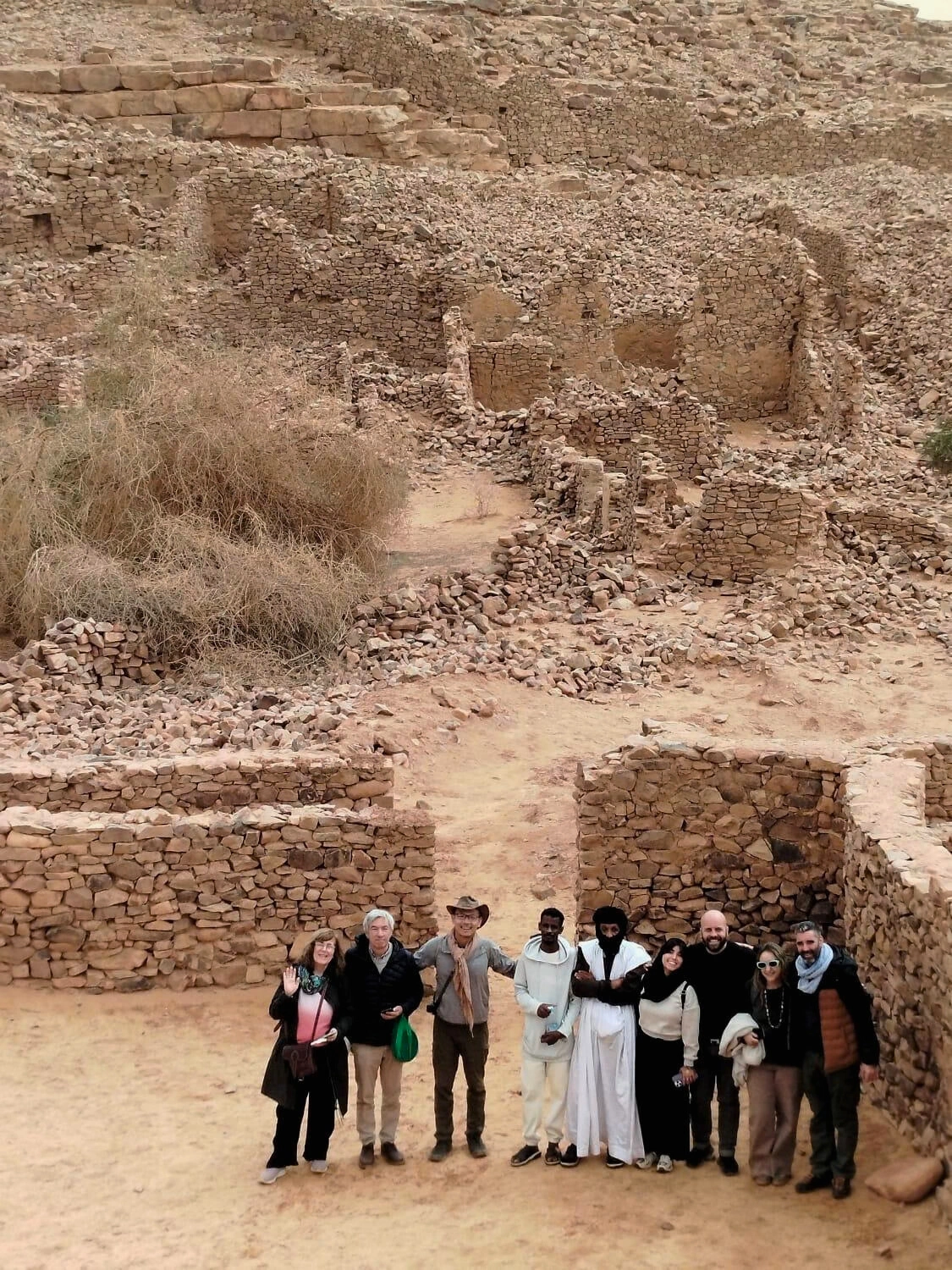
Chinguetti doesn’t impose itself; it reveals itself. It’s a quiet city, shaped by the desert and by centuries of history. Walking its streets is walking over memory — over knowledge passed down from generation to generation — over a constant struggle to endure.
From the very first day, I sensed I was in a place that is vulnerable and, at the same time, profoundly strong. Vulnerable because the dunes keep advancing, because of its geographic isolation, and because resources are scarce. Strong because of the dignity of its people, their ability to adapt, and the deep sense of community you can feel in every everyday gesture.
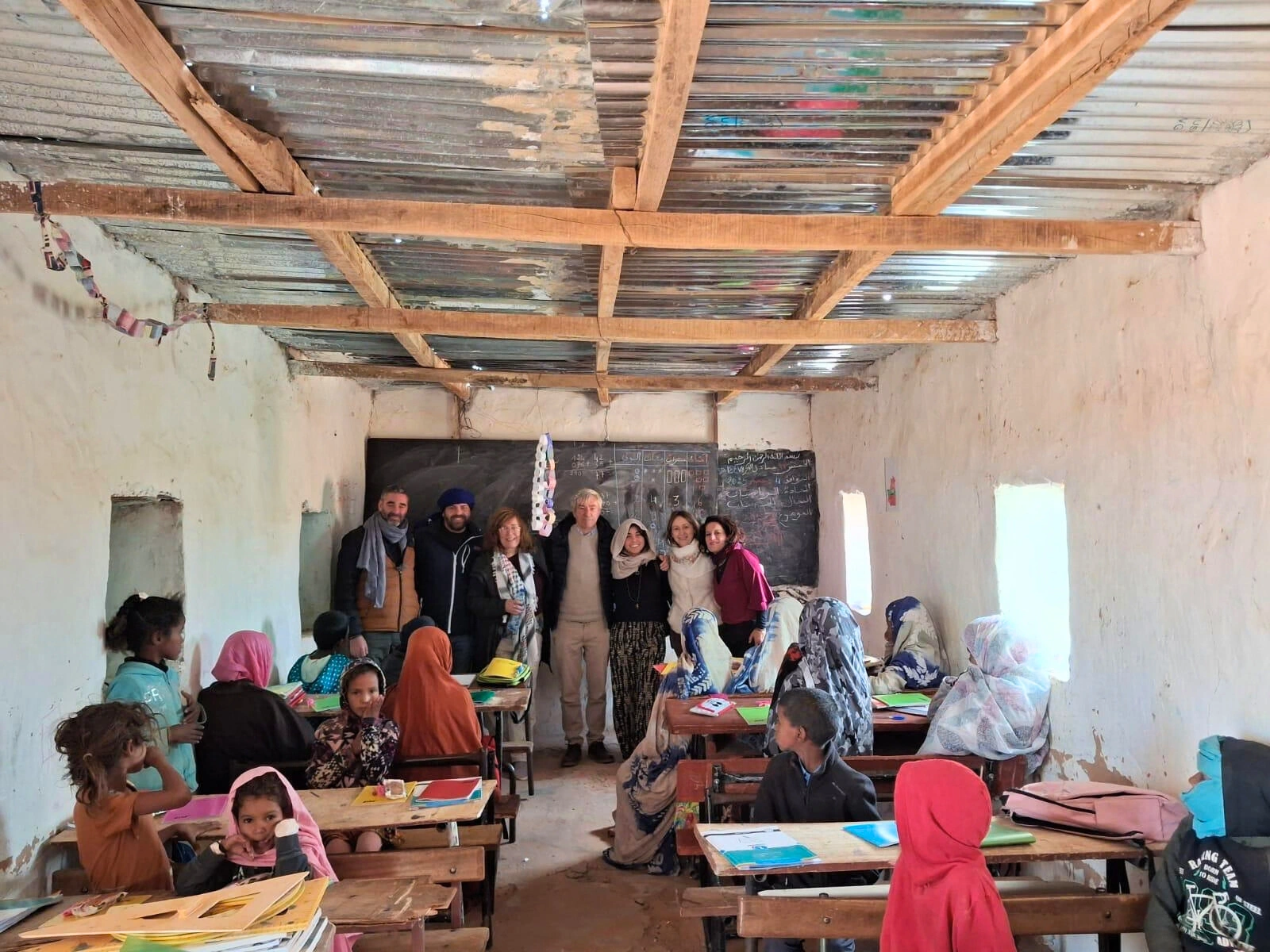
One of the moments that best captures the spirit of the project came during one of the first classes, just two days after we began. I remember perfectly how, without even noticing, we had gone past the scheduled end of the lesson.
Normally, the students would have stood up and left. Instead, the exact opposite happened. They wanted to keep going. They showed a genuine interest in the exercise — in understanding, in practicing. No one checked the time. No one seemed in a hurry.
In that moment, I realized we weren’t simply teaching a Spanish course: we were offering a real opportunity, and they were embracing it with a level of motivation you rarely see. That moment confirmed something essential for me: when education is meaningful, respectful, and useful, learning turns into desire.
Another of the most revealing moments of working with the students came from an activity we did outside the classroom. Before arriving in Chinguetti, we had sent them a survey to understand which sites they considered the city’s most important tourist points. We wanted to understand how they saw their own territory — and what they believed might be interesting for a visitor.
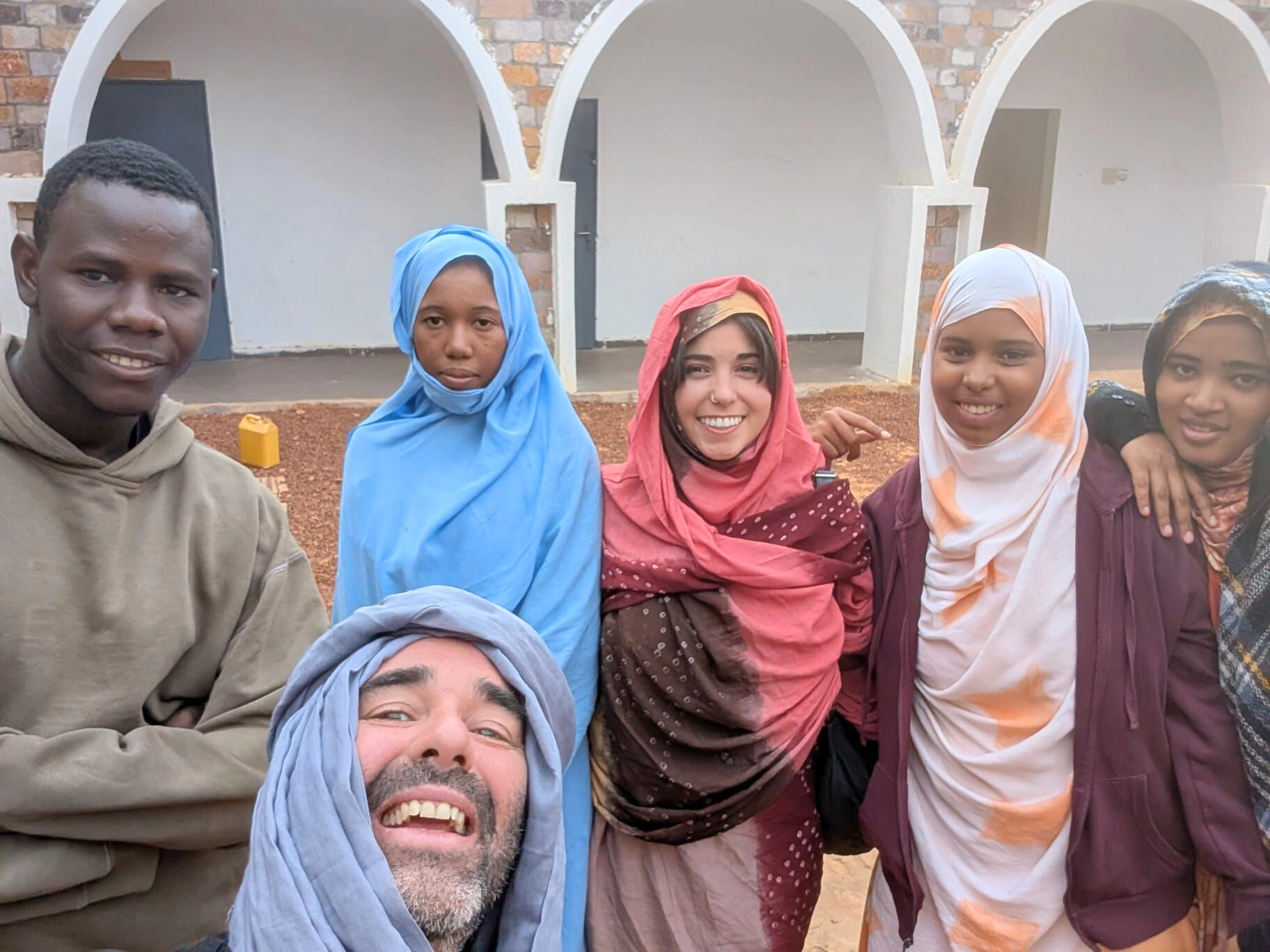
Based on those surveys, we selected several locations around the city and proposed a very specific activity: going outside, and having them explain those places to us themselves, after preparing their short talks in Spanish. Each student took responsibility for a different point and then presented it to the group.
The activity unfolded with contagious joy and total participation. Everyone wanted to speak, explain, contribute. They told us about Chinguetti from their own point of view, adding details you would hardly ever find in a travel guide. Between one stop and the next, they explained what homes are like on the inside, how family life is organized, what some traditional celebrations are — and, especially, how weddings are celebrated, telling us that the bride remains covered throughout the entire celebration.
What struck me most was the motivation they showed. They weren’t repeating a memorized speech — they were speaking about their city, their culture, and their way of life with pride. In that moment, I understood they weren’t just learning a language; they were also learning to see their own surroundings as something valuable — something worth telling and protecting.
The students’ ability to learn in Chinguetti seemed admirable to me. In just six months, many of them had reached A2 levels and even B1, able to hold fluent conversations in Spanish. That progress wasn’t accidental. It was the result of steady effort, discipline, and a shared commitment.
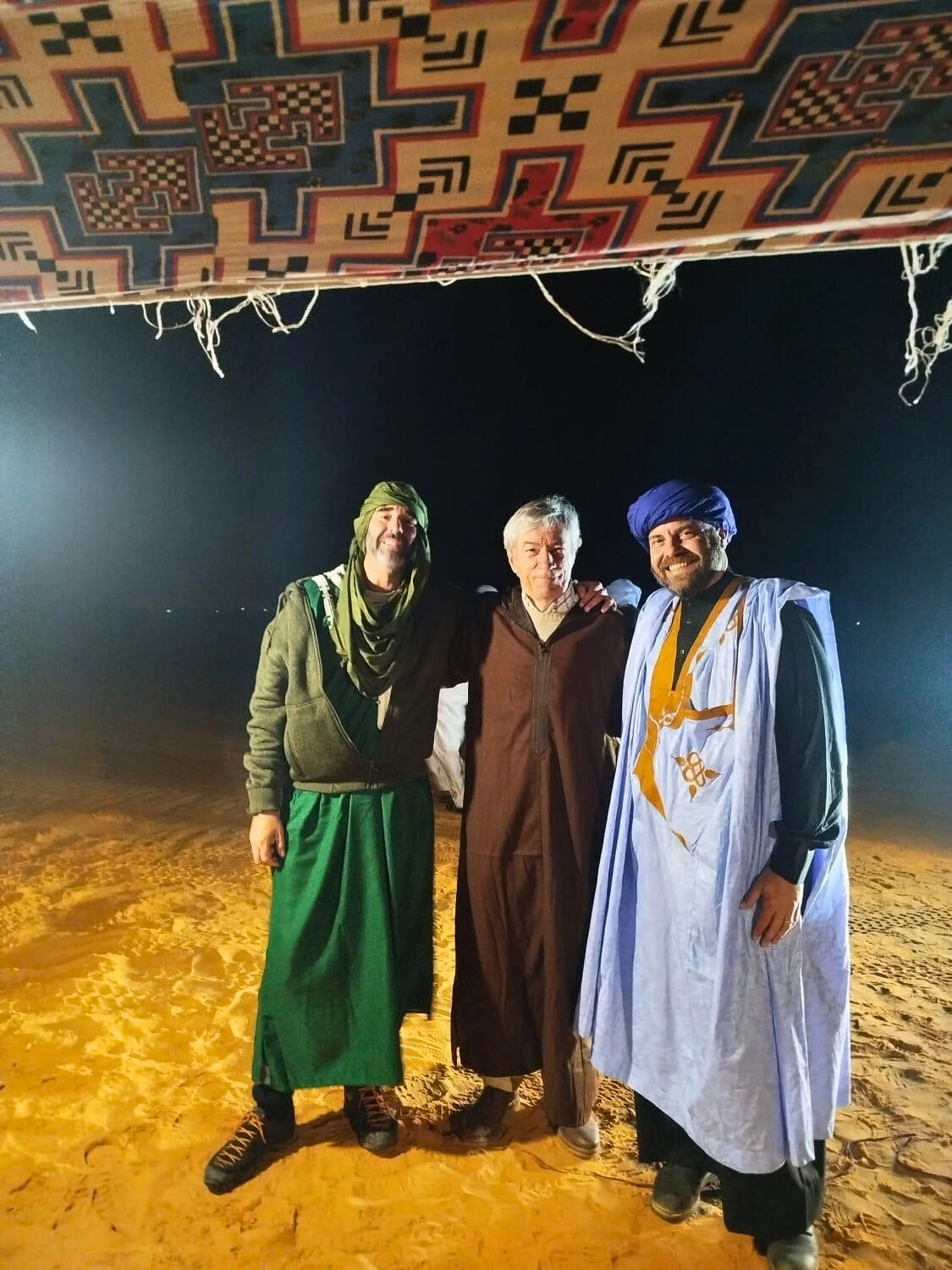
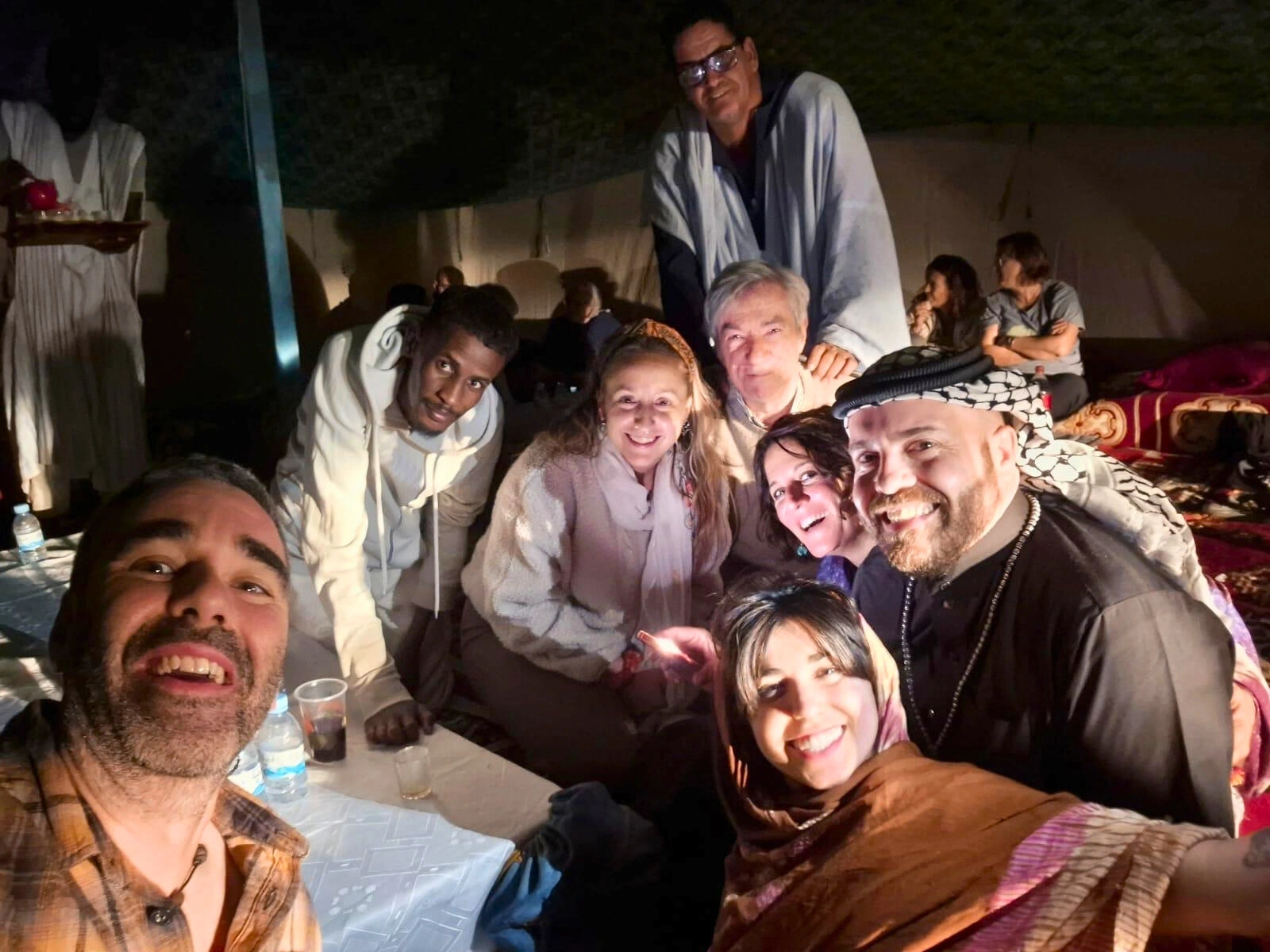
But the learning went far beyond the classroom. I saw it clearly the day they organized a surprise event for all of us out in the desert. They built a khaima, arranged catering, coordinated musicians, and prepared a theater performance and a dance show.
That day, I understood the project was truly working — not as a theoretical idea, but as a transformative experience that was giving them practical tools for their future.
The reality is that Chinguetti needs tourism, but at the same time it needs training. The two can’t be separated. Knowing a language like Spanish, in a place where many Spanish-speaking volunteers arrive in addition to tourists, becomes a tool of enormous practical and human value.
During the time we were teaching the classes, several of the more advanced students began interpreting at the hospital. They served as a linguistic bridging between the Spanish volunteer surgeons and the local population, translating from Spanish into Arabic and back again.
Watching them step into that role was one of the clearest proofs of the project’s real impact. In just a few months, language learning was already improving communication, making medical care easier, and strengthening the students’ own self-confidence.
The students are the true engine of the Chinguetti Project. Each one represents a different story, a dream, a possibility. Not everyone wants to become a tour guide, and that’s important to emphasize. Some dream of opening a shop, others of offering different services, others of working in the capital.
What matters is that they now have a solid foundation. If they stay in Chinguetti, they’ll be able to serve tourists with greater preparation. If they leave, they’ll take something essential with them: the ability to communicate.
The Europamundo Foundation doesn’t only provide training. It offers dignity — and steady support that recognizes participants as the protagonists of their own future.
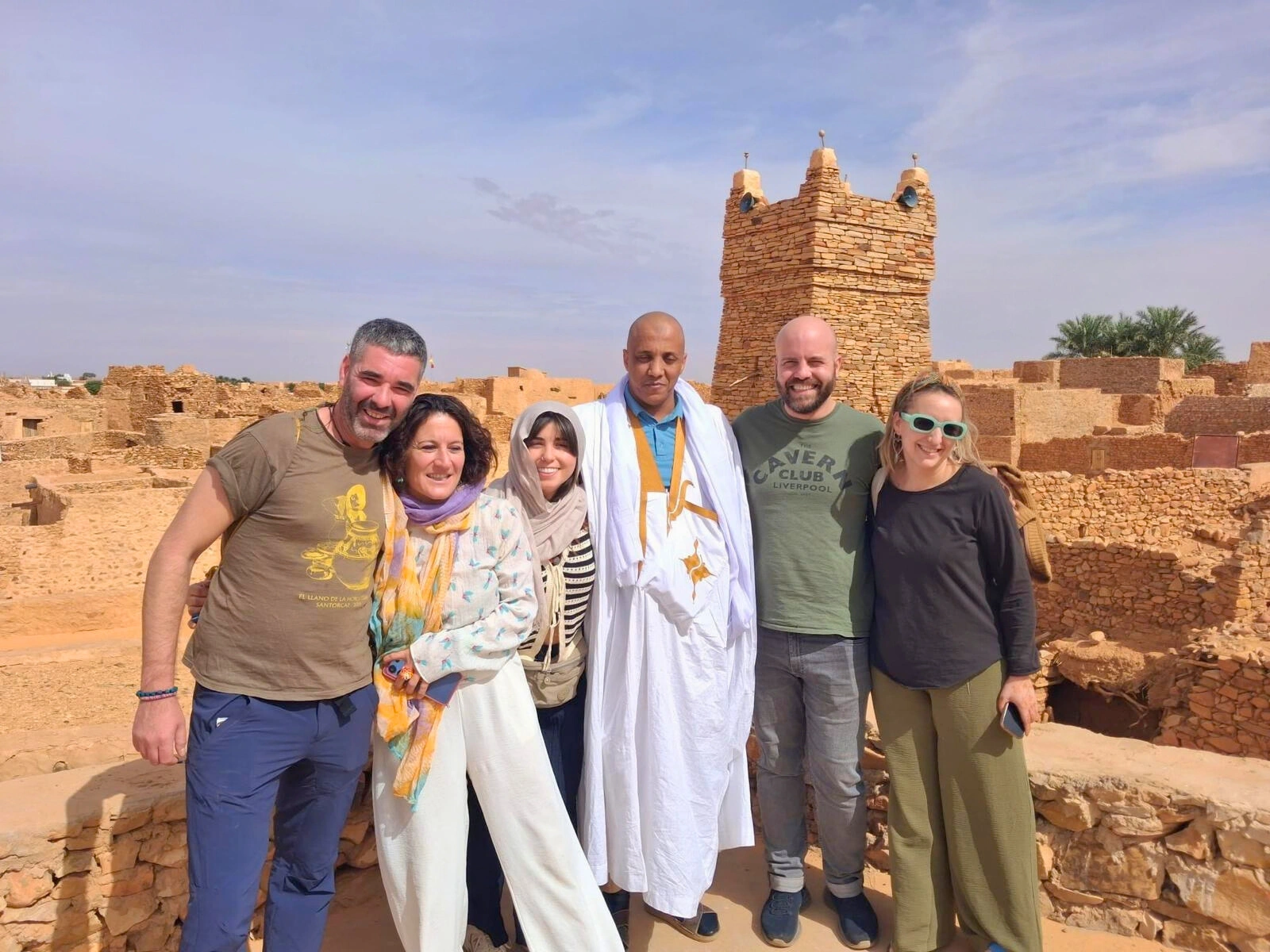
The visit to Chinguetti’s manuscript library was one of the most moving moments of the entire experience. It happened the day after we arrived. We were welcomed by Sidi Mohamed, who explained — clearly and passionately — the content of the parchment manuscripts, their history, and their cultural value, all in Spanish.
The emotion was even greater when I learned that Sidi Mohamed was a student in the Spanish course — and that just five months earlier, he didn’t speak the language. Hearing him describe a centuries-old heritage in a language he had only recently learned felt deeply symbolic. In that moment, I felt as if Chinguetti’s past and future were shaking hands.
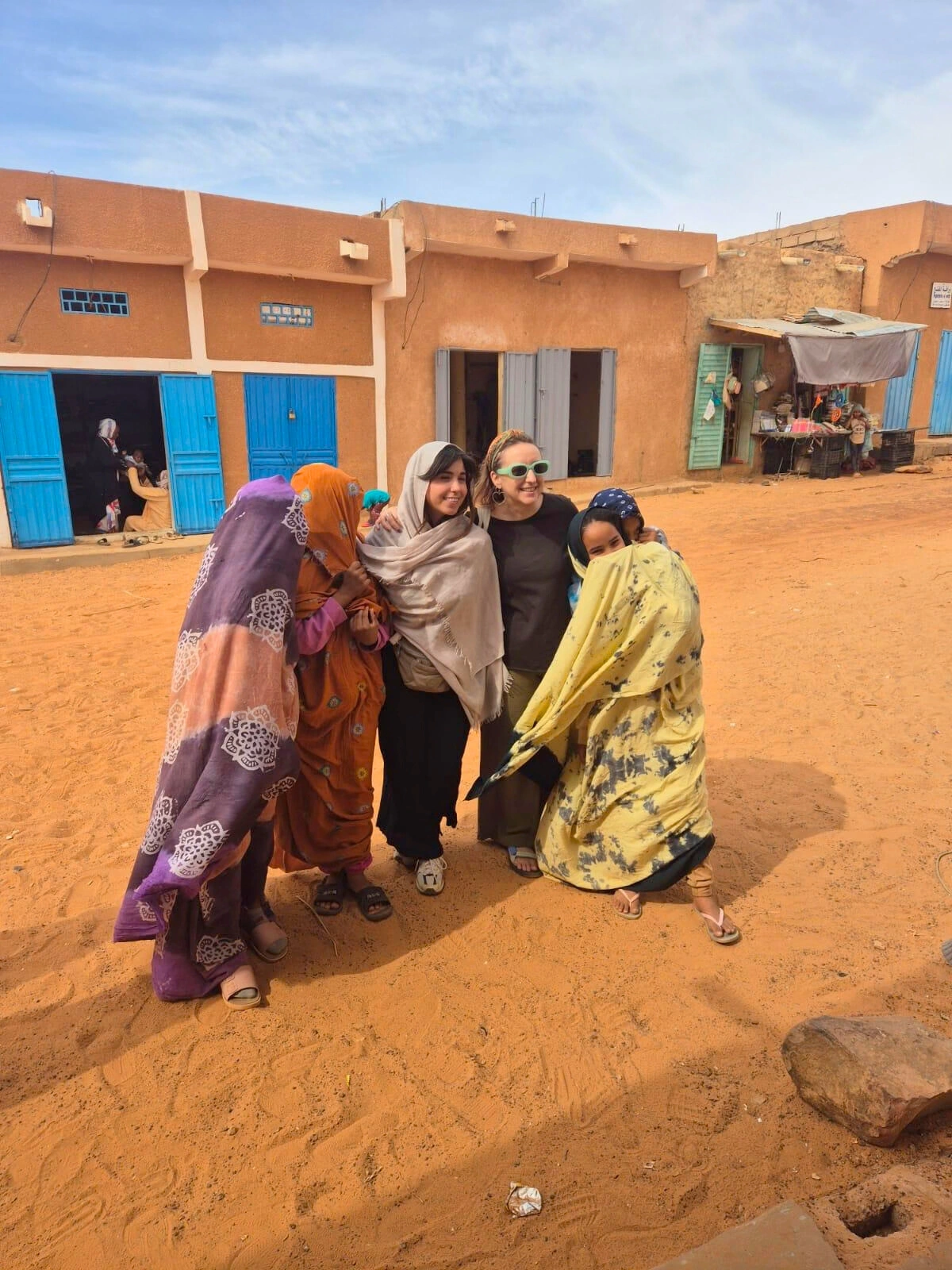
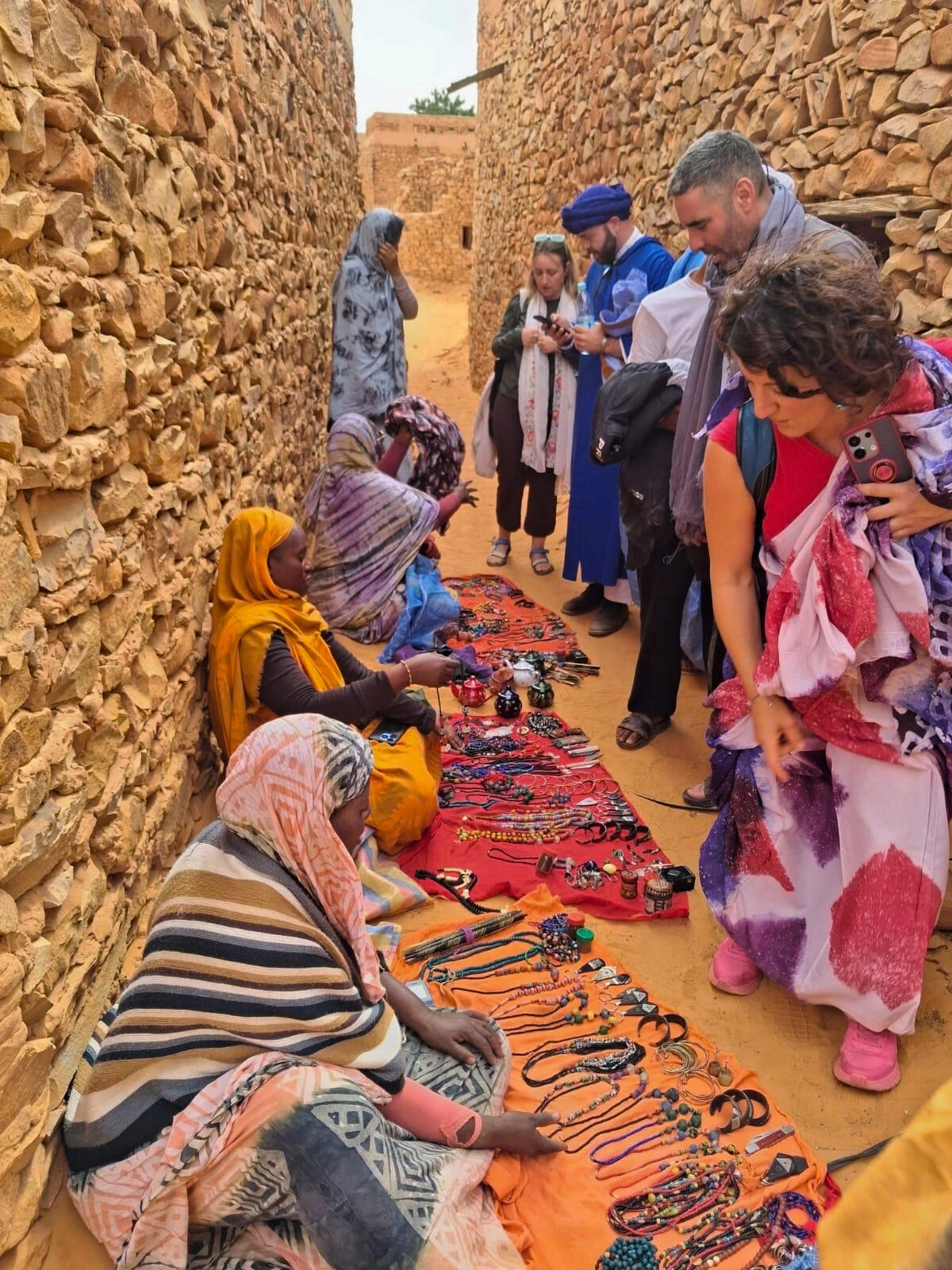
Chinguetti’s market is an intense experience. At times it can feel overwhelming, but it is absolutely authentic. The women offer their products insistently, yes — but also with a dignity and strength that force you to look beyond the simple act of buying.
For me, the market represents the real life of Chinguetti. It isn’t a stage for tourists. It’s a place of work, survival, and daily resistance. Buying there is a direct way to support the local community.
Chinguetti isn’t alone. There are several projects underway, working at the same time and in complementary ways. Some focus on planting acacia trees to slow the advance of the dunes. Others bring volunteer surgeons every three months, providing specialized medical care.
There are also hotel-style lodgings and homes that can be rented, which makes it possible to develop tourism rooted in authentic experiences — integrated into the territory and respectful of the community.
After living this experience, I’m absolutely convinced that Chinguetti needs tourism — but conscious tourism. Tourism that doesn’t consume the place, but cares for it. That doesn’t turn culture into a spectacle, but values it.
Tourism, when it is connected to education, training, and collaboration with the local population, can be a powerful tool to build bridges, preserve cultures, and open up futures. The Chinguetti Project is a clear example of that.
Chinguetti is a place at risk. The desert is advancing, opportunities are limited, and the community’s long-term survival is not guaranteed. Supporting projects like this isn’t a symbolic gesture — it’s a real necessity.
Coming back from Chinguetti hasn’t been easy. A part of me stayed there. This experience has forced me to rethink what progress really means, what time is worth, and what my role is as a visitor.
Chinguetti has taught me that dignity doesn’t depend on what you own, but on how you live. And that education — when it’s done with respect and commitment — can change lives.
This project is leaving its mark on Chinguetti. And it has left its mark on me, too.
For me, that is its greatest achievement.
Albert Gómez Herrera
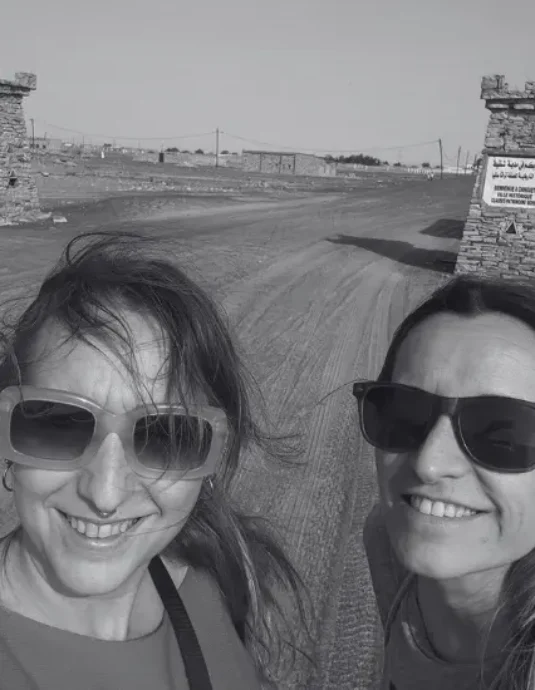
And as long as the sand keeps advancing, we will keep adding grains of hope...
Chinguetti Diary
Chinguetti Diary — By Luz and Elena Luz: Our journey to Chinguetti began as a spark after Beatriz’s and my first visit to Mauritania as volunteers for the “Solidarity Backpacks”...
See how it ends